Rxl-tech.art
Back to Home
Case Study·Engine-Level Rendering / Interactive 3D·Unknown Traffic

MLB Live Baseball VR App

A Major League Baseball VR experience focused on augmented data visualization, animated spatial UI, visual effects, and Unity-based scene prototyping for immersive match presentation.

XR UI animationSpatial dataScene prototyping

My Contribution

  • Designed and integrated development-ready animated UI elements directly into Unity.
  • Prototyped playable XR scenes in Unity to test how the visual design behaved in context.
  • Created visual effects to highlight 3D sports data and support the augmented-data presentation.
MLB Live Baseball VR App preview
01Overview

Overview

  • A live baseball VR experience developed with Major League Baseball around augmented data visualization and immersive scene composition.
  • My work focused on developing and integrating XR UI into the Unity project, including spatial data displays, visual effects, and animated interface elements.
  • I also prototyped scenes to maintain a balanced relationship between UI, 3D elements, and the broader viewing environment.
Impact
Unknown Traffic
Platforms
Meta Quest
Tools
Unity · C# · XR UI animation · Spatial data visualization
Focus
XR UI animation · Spatial data · Scene prototyping
03Technical Breakdown
item.01

XR UI Animations

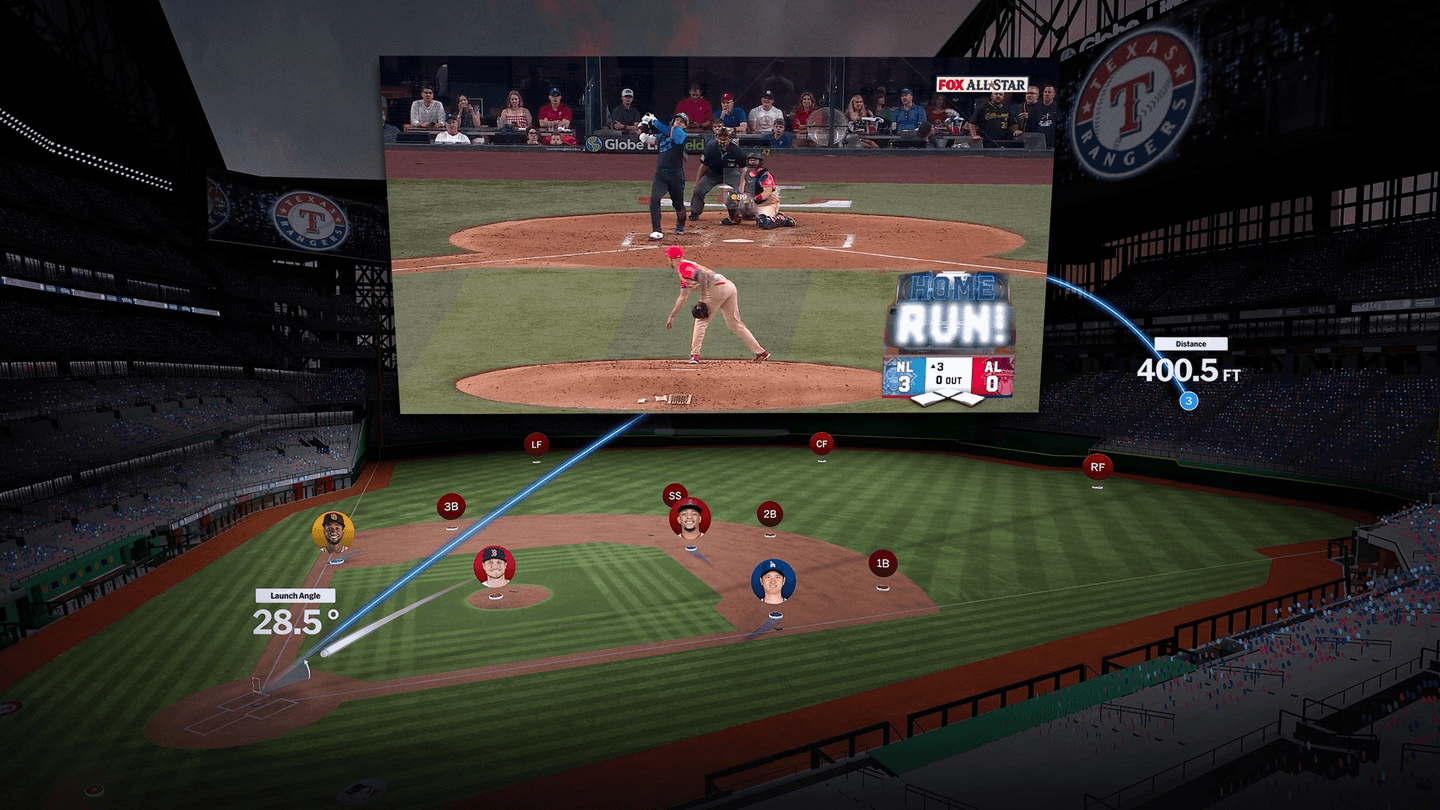
Animated XR UI panel for the MLB VR app

Animated multistate spatial panel

A major part of the project was designing and integrating animated multi-state spatial panels that could appear at different scales and respond either to user interaction or to match events.

To make the implementation production-ready, I built and validated those UI elements as functional Unity prefabs while staying close to the intended visual design.

item.02

Scene Prototyping and Data Visualization

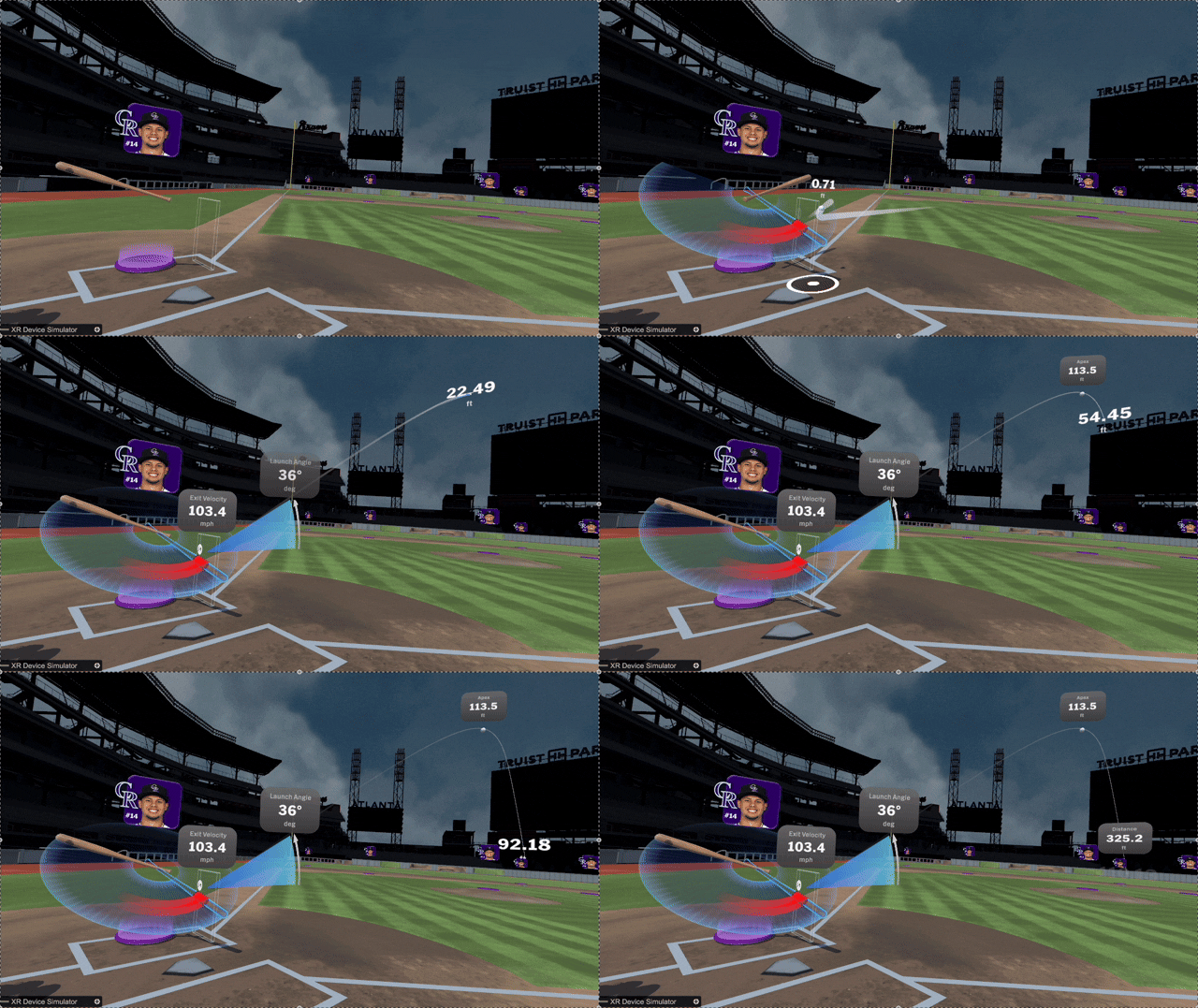
Animated batting scene with layered baseball data visualization

Animated batting scene and data layers

The scene work was about balance as much as polish: animated UI, sports data, and visual effects all had to coexist without obscuring the main action in VR.

That required both technical implementation in Unity and a design-driven sense of how data, motion, and the broader environment should share attention during playback.